Chronicles · Geo Aragon
The First Cut Is Not the Movie
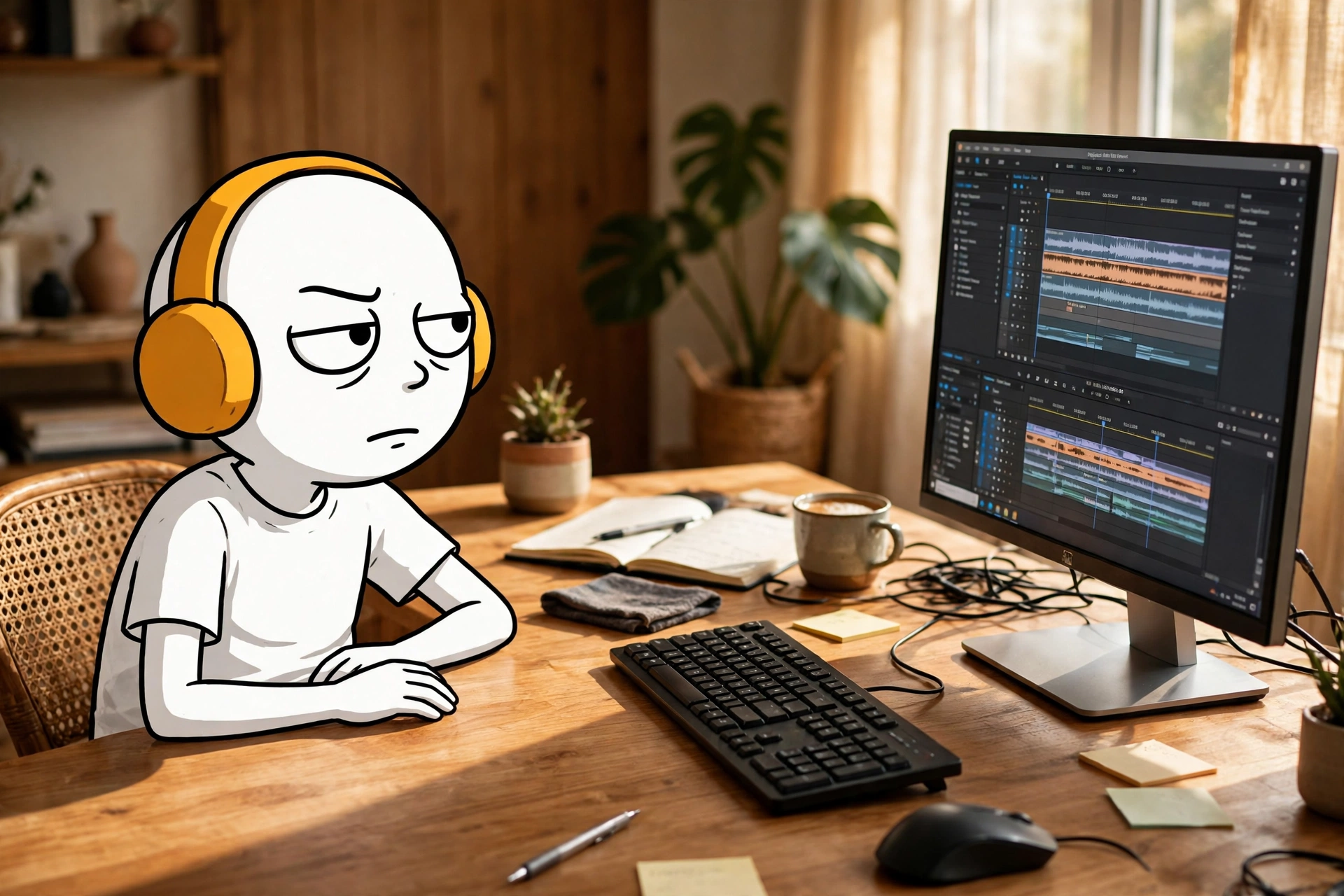
Every editor has lived this scene. You finish the first version, you play it from start to finish without anything falling apart, and for a moment you breathe easy. It has a beginning, it has music, it has order, it has an ending. It looks like a movie. And that is the trap: looking like a movie is not being the movie.
The first cut is the most dishonest version of the process, because it is the first one you can watch all the way through. And whatever can be watched all the way through, your head marks as finished. This chronicle points at the problem, as always: the first cut is not made to please anyone. It is made for something else, far more uncomfortable and far more useful.
The first version lies with a good presentation
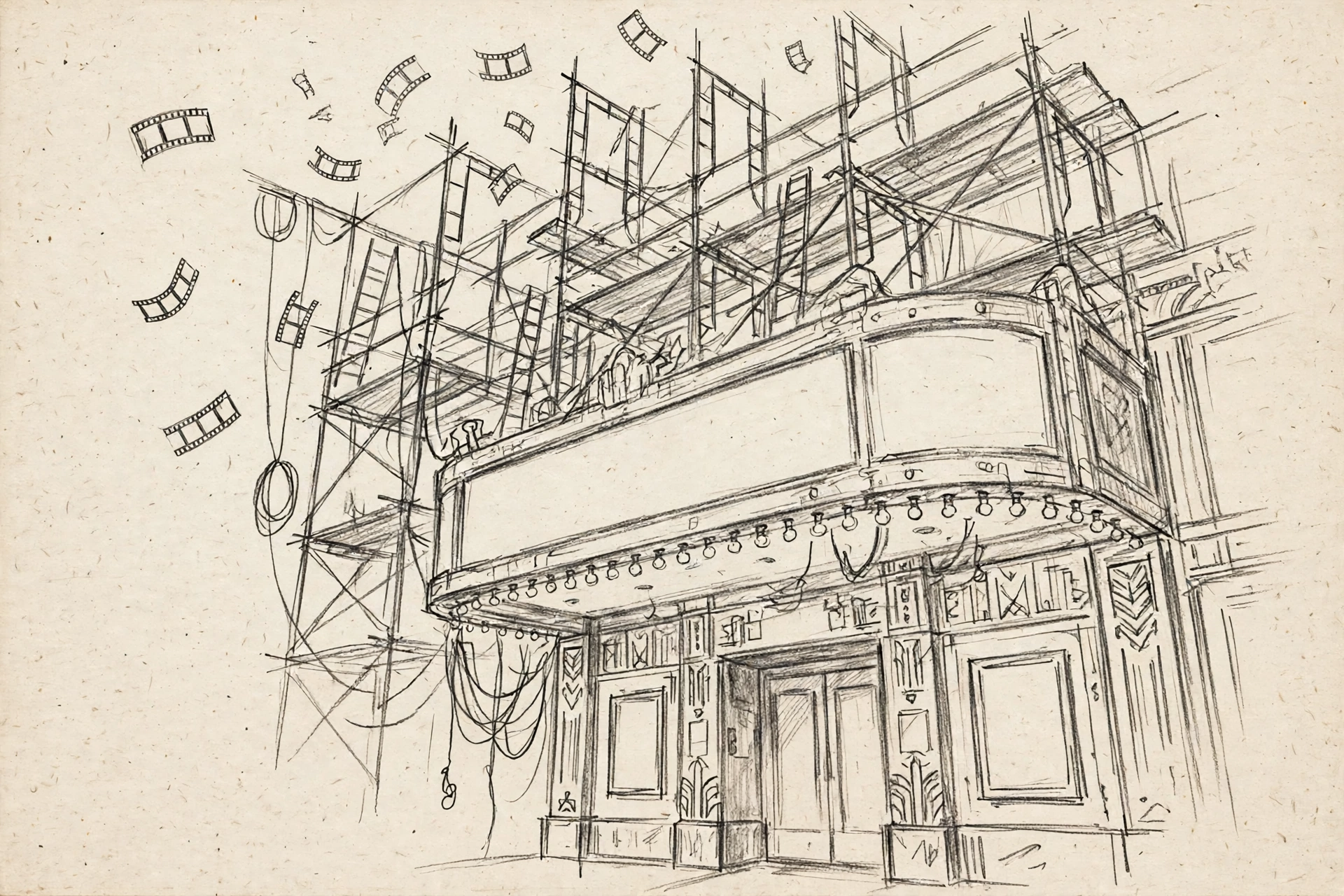
The first cut puts the footage in the order that seemed logical: what was written first goes first, every scene lasts as long as the footage lasts, every good shot finds its place. The result is watchable. And that is exactly why it deceives you: nobody questions something that already «works» on screen, even if inside it is still just footage arranged in a row.
The lie is not technical, it is deeper. In the first cut, the movie hidden inside the footage has not shown up yet: the scene that needs to go even though it was beautifully shot, the shot that should open the piece and ended up buried in the middle, the silence nobody placed because nobody was looking for it yet. All of that is still there, waiting. The first cut does not reveal it: it covers it up with its good presentation.
The version chaos: everyone is watching a different movie
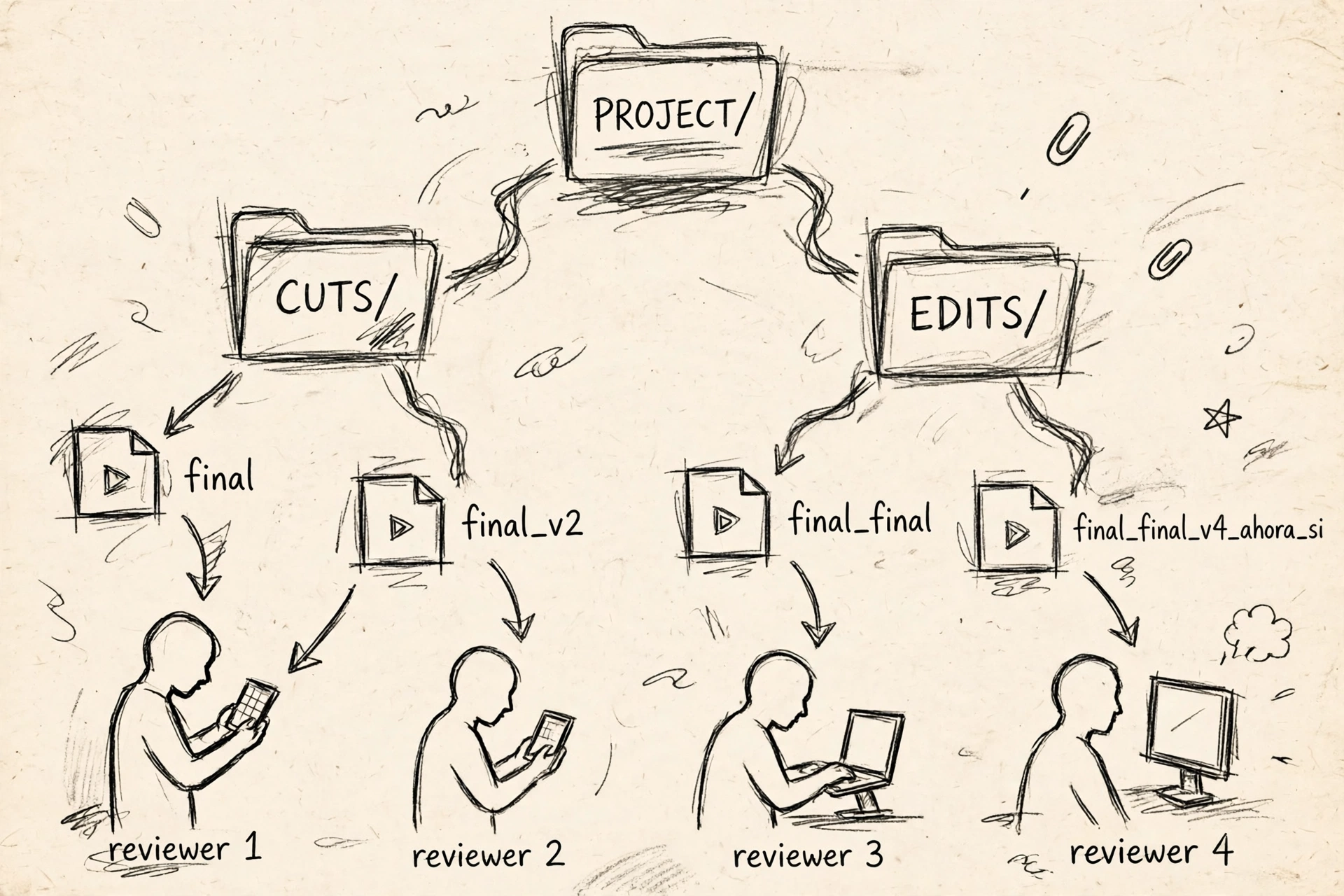
If the first cut gets treated like the movie, the second problem shows up, and it is pure disorder. Version 2 arrives, then the «final» one, then «final_final», then the one with the saddest last name in the trade: «this_is_it». The director gives notes on one, the producer watched another, the client approved a third one that nobody can find anymore.
And the notes cross each other: «the shot you removed» turns out to still be there in the version someone else is watching; «the change you asked for» was already made, but in the wrong file. Nobody is fighting over the story: they are fighting because each person is working on a different movie with the same name.
The problem is not the version: it is what we ask of it
None of this gets fixed with more versions. It gets worse. Because the real problem is something else: we ask the first cut to be the movie, to move people, to convince, to be ready to show. And a first cut born with that obligation is born defended: nobody wants to touch what already «worked» once in front of everyone.
The first cut has a different job, and it is a less friendly one: to tell the truth about the footage. To show what is there and what is not, which scene holds and which one collapses, where the story breathes and where it is only pretending to say something. A first version that tells the truth is rarely liked. And it is almost always the only one that can lead you to the real movie.
Where this is worked on in the book
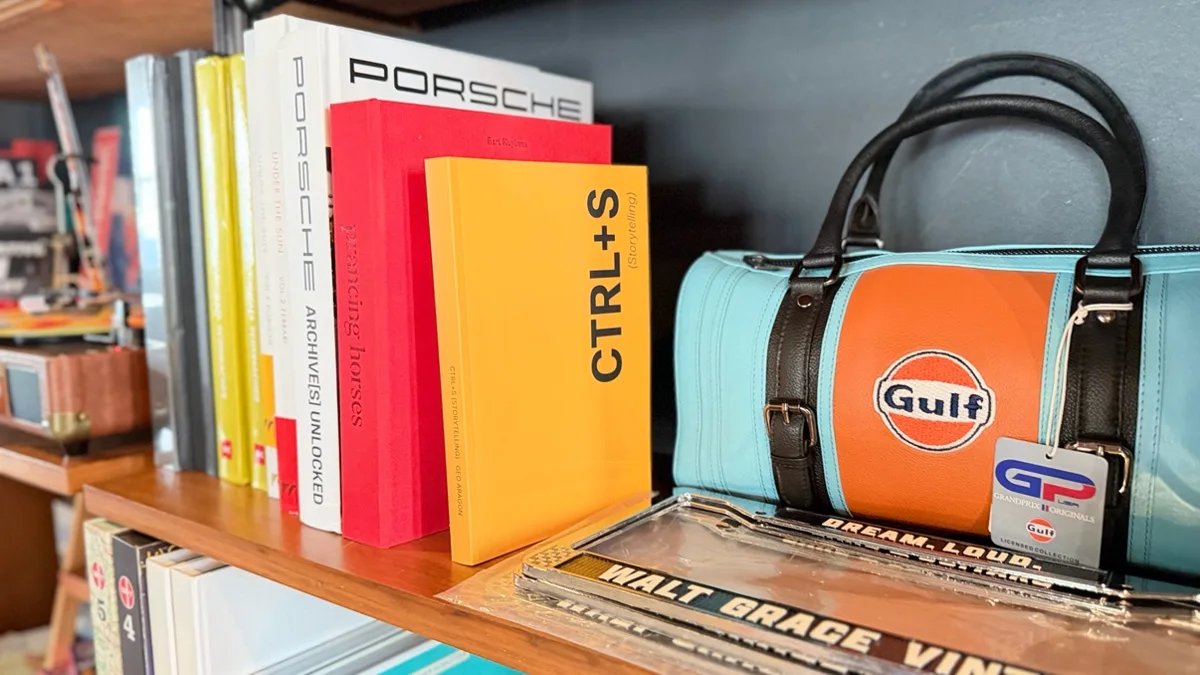
In CTRL+S (Storytelling) this problem has its home. Scene 9, «From Material to Cut: Building the First Version That Can Tell You the Truth», works on exactly that: how to build a first version made for seeing, not for showing off. Scene 8, «The Story Map: The System That Allows You to Create», works on the order that keeps everyone from ending up watching a different movie. And Scene 10, «The Narrative Machine: From Picture Lock to Finishing», works on what happens next, when the version finally is the movie and starts to travel.
Here, the problem is only pointed out: the first cut is not the movie, it is the first honest mirror of the footage. The difference between the two is the full work, and that work is in the book.
Geo Aragon